
US Treasury Yield Surge Challenges Washington's Stance on Borrowing Costs
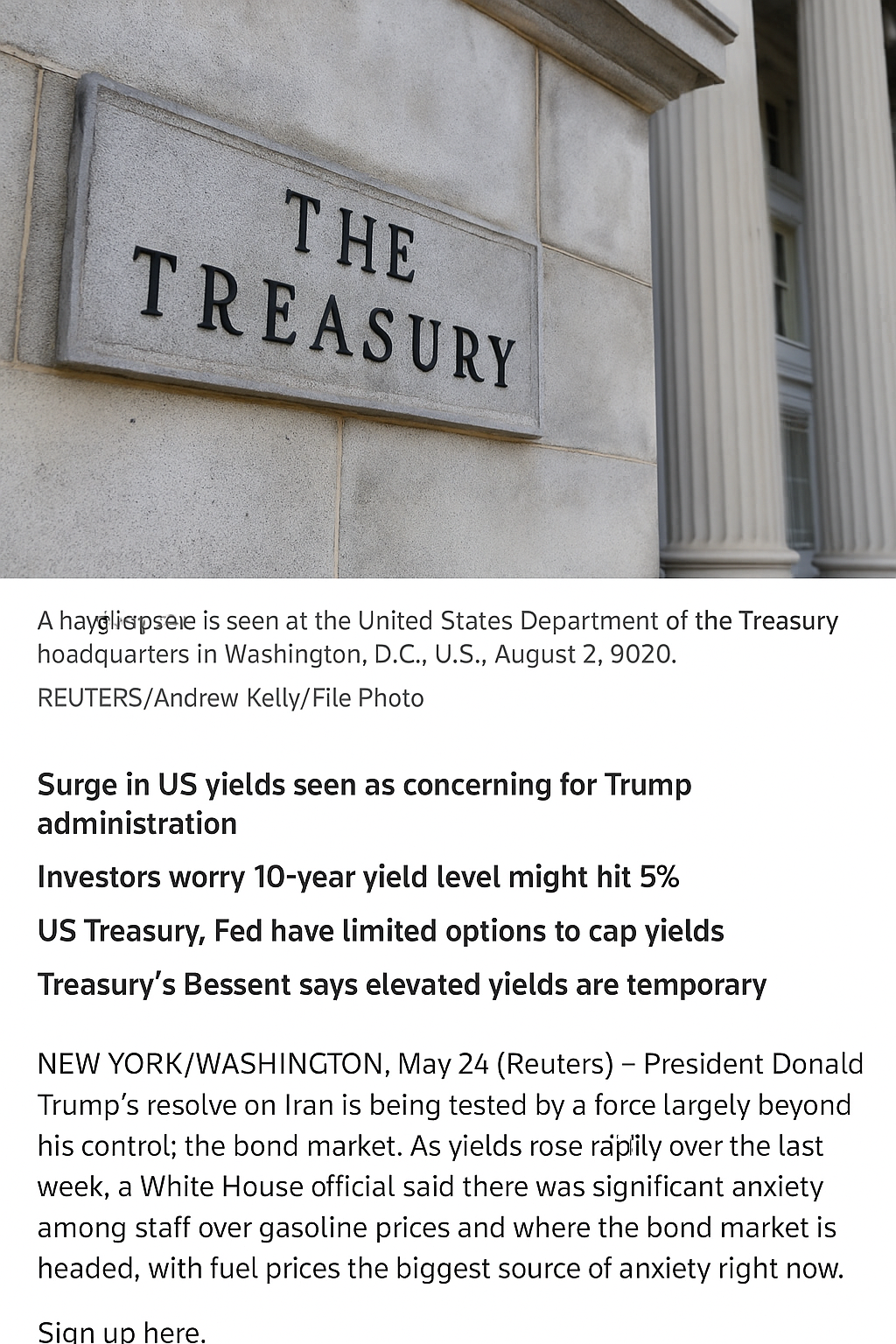
Signage at the United States Department of the Treasury headquarters in Washington, D.C., is highlighted as a backdrop for emerging economic fears. Recent climbs in US Treasury yields have sparked concerns within the Trump administration, particularly regarding the potential impact on borrowing costs. Investors are apprehensive that the 10-year yield might escalate to 5%, adding pressure on the Treasury and Federal Reserve to manage these rates. As President Trump manages international issues, particularly relations with Iran, there is growing anxiety within the White House over rising gasoline prices and their connection to the bond market. High yields imply elevated borrowing costs for both businesses and consumers, while climbing oil prices heighten inflation expectations—a troubling combination as midterm elections approach. Economic strategist Greg Faranello notes the challenges the president faces in addressing rising rates, which are likely to affect the housing market and mortgage rates. Recent comments from Trump indicated a focus on de-escalation in the Middle East may be a strategy to stabilize market sentiments. Despite some relief observed in Treasury yields following announcements on diplomatic progress with Iran, borrowing costs remain a critical concern that could influence consumer spending and threaten economic stability as the elections draw near. Despite ongoing worries, Treasury Secretary Scott Bessent assures that current elevated yields will be temporary, although market reactions remain to be seen. Policymakers are cautious about aggressive interventions that could harm their credibility on inflation, particularly as current increases are partly driven by economic growth rather than solely government borrowing concerns.
Leave a Comment