
Is It the Right Time to Invest in BTC? CoinGecko Highlights US Holidays
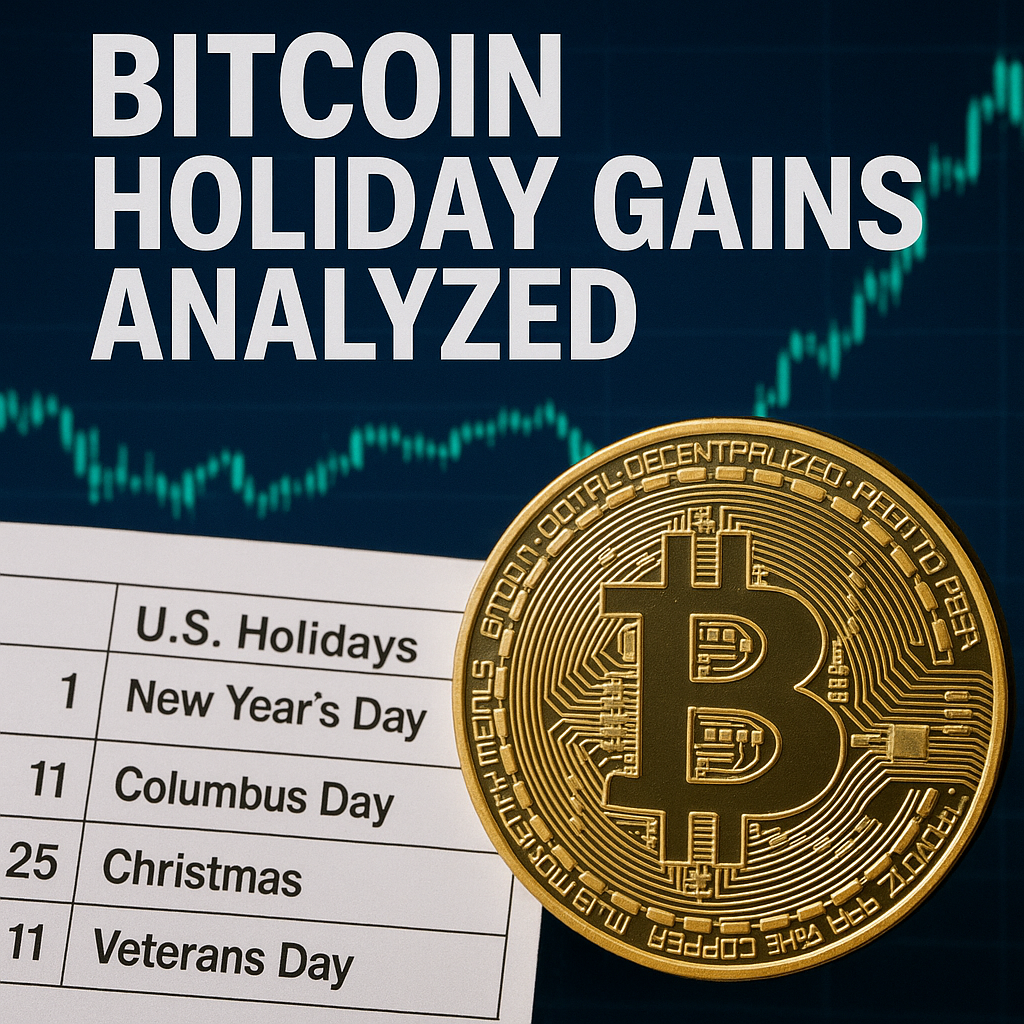
According to a recent analysis by CoinGecko, purchasing Bitcoin on US holidays has historically yielded significantly higher short-term returns compared to regular trading days. The study reviewed Bitcoin’s future returns across various dates from May 1, 2013, to May 8, 2026, concentrating on single-day profits post-purchase. The findings revealed that US holidays produced an average next-day return of 0.77%, in contrast to just 0.19% on non-holiday days. Notably, holidays surpassed standard weekdays in returns for 11 out of the 14 years examined. Among weekdays, Mondays and Wednesdays showcased the highest average next-day return at 0.38%, while Thursdays alone marked a negative average return of 0.09%. The analysis highlighted New Year’s Day as the top-performing holiday, yielding an impressive average next-day return of 2.01% across 13 instances with an 84.6% success rate, indicating Bitcoin's price increased the day after in 11 of those 13 years. Columbus Day also had an 84.6% success rate, with an average return of 1.70%, while Christmas produced a 1.46% next-day gain and a 53.8% win rate. CoinGecko theorized that the strong performance on New Year’s Day could reflect the broader January momentum effect often seen in traditional markets, where investors inject fresh capital at the year’s outset. Furthermore, Bitcoin may experience benefits from a transition away from December's tax-loss selling into January’s renewed investment strategies. The report noted that Bitcoin’s value on January 1 varied from $313 in 2015 to $93,507 in 2025, though the trend of subsequent gains remained relatively stable throughout that timeframe. However, not every holiday yielded positive results; Martin Luther King Jr. Day recorded the weakest performance, with an average negative return of 0.84%, primarily due to Bitcoin’s significant drop of 18.65% after January 15, 2018, during the onset of the cryptocurrency bear market. Independence Day also noted a negative average return at 0.26%. Although Veterans Day showcased an average gain of 1.75%, CoinGecko advised that this figure was skewed by a few unusually high rallies, and the holiday’s win rate lingered below 50%. The study found minimal difference in Bitcoin performance between weekdays and weekends, with weekdays averaging a 0.21% gain compared to 0.22% on weekends, a discrepancy deemed statistically insignificant due to Bitcoin's continuous trading nature. Additionally, when considering a one-year holding period, the day on which Bitcoin was purchased proved to have little impact on long-term returns, with average annual gains across all weekdays confined within a narrow 2.4 percentage point range. CoinGecko observed that while holiday purchases exhibited slightly higher one-year returns, these trends likely mirrored broader market cycles rather than sustained holiday-related boosts. In terms of recent market activity, Bitcoin’s price has rebounded above $80,000 after briefly dipping below that threshold earlier in the week. Experts attributed this decline to various concurrent pressures affecting the market. On-chain data indicated that Bitcoin exchange outflows had sharply decreased prior to the selloff, resulting in greater coin availability on trading platforms and increased sell-side supply. Concurrently, derivatives traders were actively building short positions, while leveraged long exposure remained high. As prices began to decline, a surge of long liquidations propelled the downward movement. Furthermore, rising inflation concerns following new US CPI and PPI data, alongside significant selling by large investors, further exacerbated market pressures.
Leave a Comment