
Trump Critiques Iran's New Peace Proposal as 'Unacceptable'
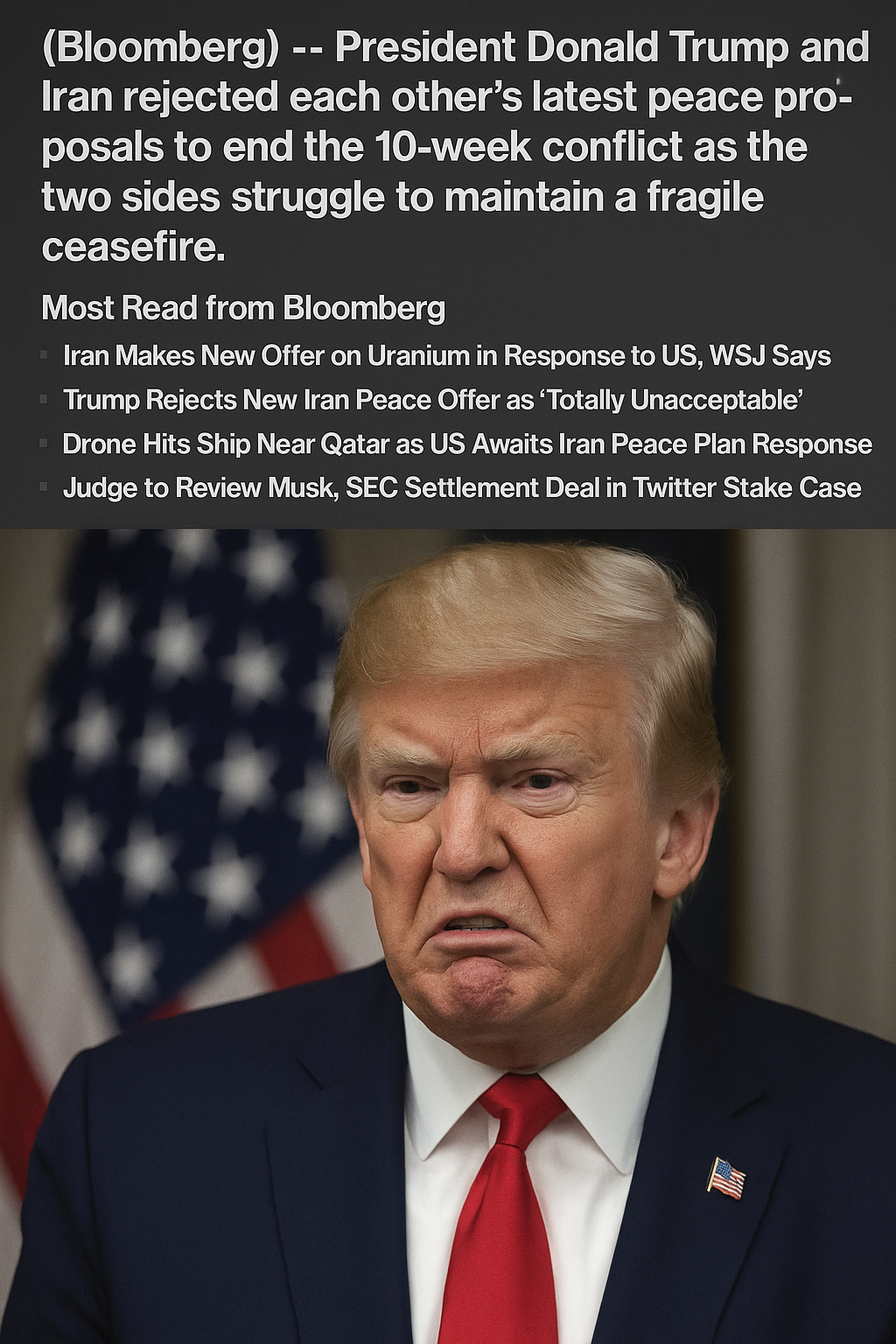
(Bloomberg) -- President Donald Trump and Iranian officials have dismissed each other's recent peace initiatives aimed at resolving the ongoing 10-week conflict, which has put a fragile ceasefire at risk. In a social media post, Trump characterized Iran’s response to the proposals as “TOTALLY UNACCEPTABLE.” Following his remarks, the US dollar strengthened against major currencies. Iran's offer included the transfer of some highly enriched uranium to a third country but rejected the notion of dismantling its nuclear facilities, a claim disputed by Iran’s semi-official news outlet Tasnim. The Wall Street Journal reported that while Iran proposed diluting its uranium stock, it sought assurances that the material would be returned if negotiations collapsed and maintained its stance against dismantling its nuclear setup. Tasnim asserted that the Journal’s claims regarding nuclear material management were inaccurate. Iran is advocating for an immediate cessation of the conflict, the release of frozen assets, lifting US sanctions on oil exports, removing the blockade in the Gulf of Oman, and granting Iran control over the Strait of Hormuz. Trump’s proposal included allowing navigation through the Strait in exchange for lifting the blockade on Iranian ports, with further talks on nuclear issues to follow. Following Trump’s remarks, oil prices saw an uptick, with Brent crude rising approximately 3.5% to over $104 a barrel. US equity futures faced a slight decline as the ongoing standoff impacted market sentiments. In a separate social media comment, Trump accused Iran of “playing games” and suggested that their antics would soon come to an end. Despite the current tensions, Trump plans to visit China this week. He has consistently emphasized that Iran must not obtain nuclear weapons, claiming they had previously agreed to abandon their nuclear goals. While he did not outline potential repercussions for Iran's response in his remarks, Trump appears eager to resolve the conflict amid pressure to lower gas prices ahead of the November midterm elections, which are critical for his Republican allies. The conflict has resulted in significant casualties across the Middle East and disrupted oil and gas markets, leading to increased fuel prices that burden governments and consumers worldwide. Notably, Saudi Aramco cautioned that market normalization could take months, even with the Strait of Hormuz re-opening immediately. In an interview on CBS’s 60 Minutes, Prime Minister Benjamin Netanyahu expressed his desire to phase out US military financial support for Israel within the next decade. Currently, the US allocates $3.8 billion annually in military assistance to Israel, as part of a decade-long agreement from the Obama administration that extends until 2028. Although a ceasefire has been in effect since April 8, there was a recent drone strike on a cargo vessel near Qatar in the Persian Gulf, highlighting ongoing tensions in the region. Both the United Arab Emirates and Kuwait reported intercepting hostile drones.
Leave a Comment