
Potential Upgrade for XRP Ledger with Tokenized Gold, According to Web3 Founder
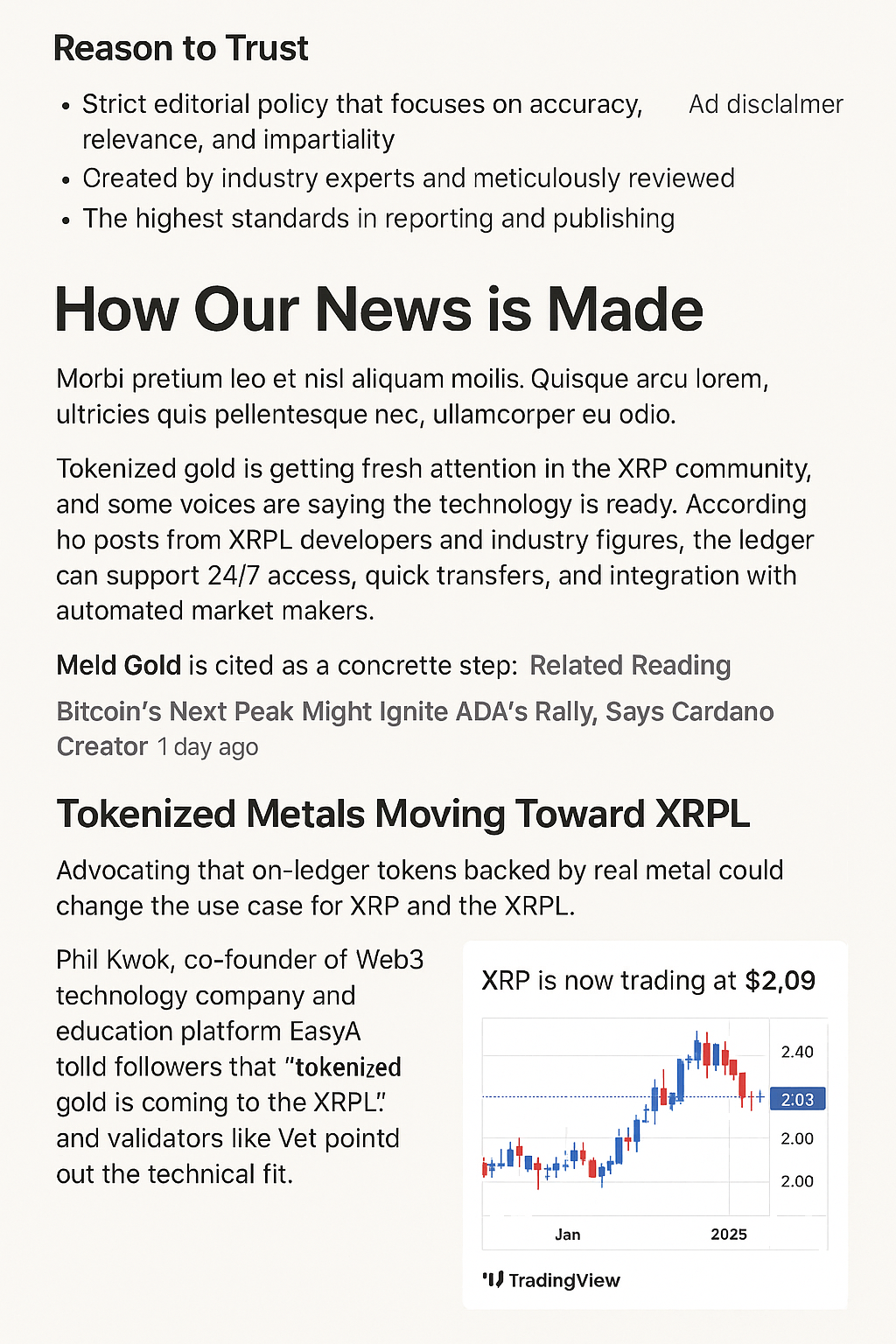
The XRP community is buzzing with renewed interest in tokenized gold, as experts suggest the XRPL technology is nearly ready. Prominent figures in the XRPL developer community report that the ledger can facilitate 24/7 access, rapid transactions, and seamless integration with automated market makers. Recently, Meld Gold has taken a significant step forward by partnering with Ripple in June 2024, launching gold and silver tokens in Q3 2024, each secured by one gram of physical metal held by trusted custodians. This development has established a tangible product on the ledger rather than mere speculation. Advocates believe the introduction of on-ledger tokens backed by physical metals could redefine the functionality of XRP and the XRPL. Phil Kwok, co-founder of EasyA, stated that “tokenized gold is on the way to the XRPL,” with technical capabilities corroborated by validators like Vet. They highlighted the potential for constant availability and links to DeFi tools, questioning the slow pace of broad adoption. Future features such as lending and escrow could enhance the utility of tokenized metals. Despite existing demand for tokenized metals, as evidenced by the significant assets managed by firms like Paxos and Tether, execution remains crucial. Pano Mekras from Anodos Finance emphasized that the absence of clear economic incentives could deter large firms from product launches on XRPL, pointing to the need for proactive engagement and robust on-ledger incentives. Currently, XRP is trading at $2.09. Following the early January surge above $2, which saw highs of approximately $2.41, XRP has subsequently experienced a pullback of around 14%. Traders are balancing institutional inflows against profit-taking, although it's unclear if the emergence of tokenized metals has impacted these price movements, which are monitored independently from product launches. The introduction of additional tokenized metal offerings could broaden the utility of the XRPL beyond mere payments, potentially increasing transaction volumes and paving the way for innovative DeFi applications tied to these tokens. However, the successful adoption hinges on solid custody structures, auditing protocols, and clear regulatory frameworks, as economic incentives will be key to attracting major issuers.
Leave a Comment