
CertiK Report Highlights Alarming Rise in Crypto ATM Fraud with $333 Million Lost in 2025
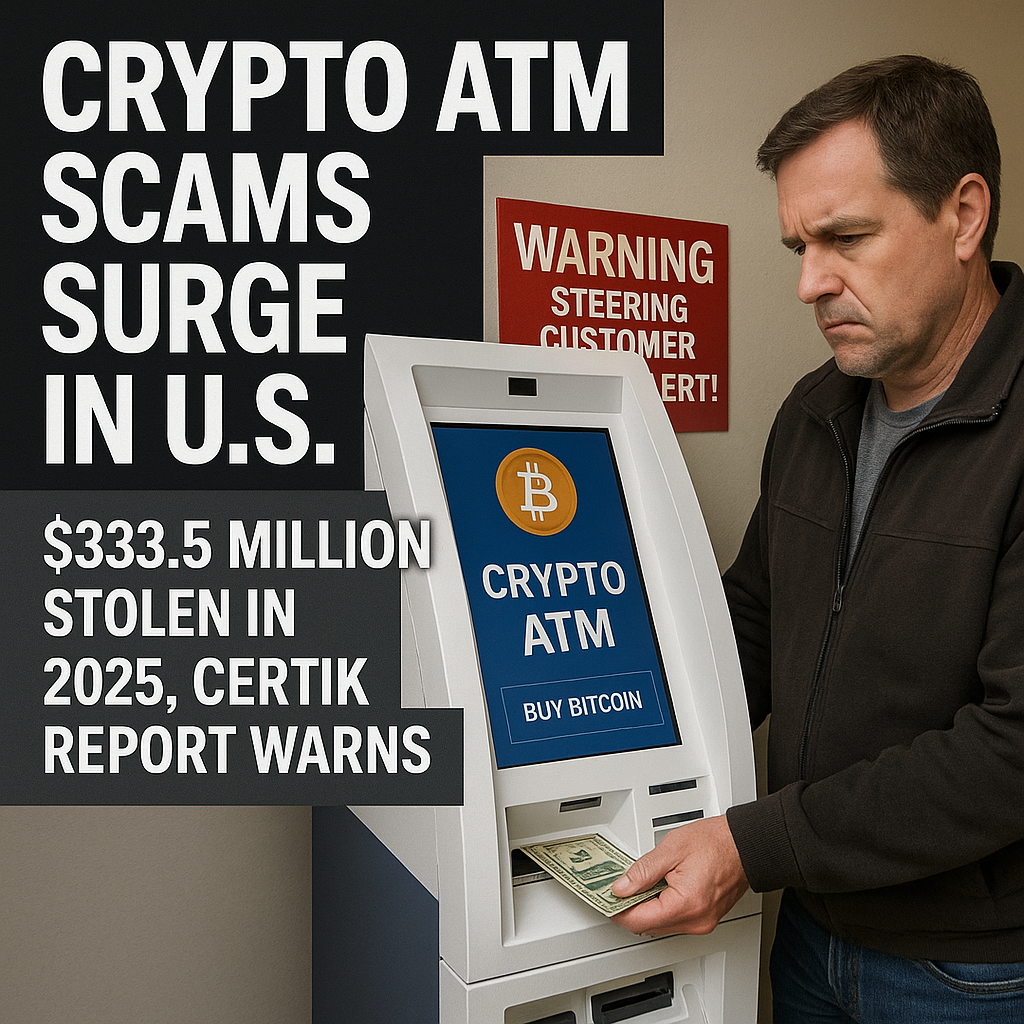
A recent study by blockchain security firm CertiK indicates a significant increase in crypto ATM fraud across the United States. In 2025, illicit activities resulted in approximately $333.5 million being siphoned off, underscoring the vulnerabilities associated with cash-to-crypto kiosks. The design of these ATMs, which allows for rapid transactions with minimal identity checks, makes them appealing targets for scammers. In under five minutes, cash can be converted into digital assets, often before victims even realize they have been compromised. These ATMs, commonly situated in convenience stores, gas stations, and shopping malls, are easily accessible to the general public. Their prevalence facilitates fraudulent schemes, as scammers often mislead individuals into making illicit transfers, bypassing alerts that appear on-screen. CertiK reports that the U.S. comprises about 78% of the estimated 45,000 crypto ATMs globally, marking it as the largest market for such machines. This widespread distribution has contributed to an uptick in fraud incidents, with the Federal Bureau of Investigation receiving over 12,000 complaints from January to November 2025, a 33% rise compared to 2024. Many of these scams employ social engineering tactics, where criminals manipulate users into depositing funds under false pretenses. Compounding the issue, the technical configuration of ATMs serves as front-end interfaces linked to back-end Crypto Application Servers (CAS), resulting in funds that typically originate from operator-controlled hot wallets instead of directly from customers. This creates an "attribution gap" that complicates efforts to trace stolen funds, as blockchain records show transactions from operators, not the victims themselves. Older adults are disproportionately affected, representing about 86% of losses linked to crypto ATMs. In one investigation by the Office of the Attorney General for D.C., 93% of deposits made on certain Athena Bitcoin machines were found to be fraudulent, with the median victim age being 71. Their limited familiarity with digital finance makes them particularly susceptible to these scams. Organized criminal networks have proliferated, employing strategies for lead generation, calls, and fund laundering. Some Asian syndicates reportedly laundered $16.1 billion in 2025, often coordinating rapid transactions via platforms like Telegram. Scam tactics have also evolved to include impersonation of government officials, phony tech support, romance fraud, and emergency family schemes, with increasing use of artificial intelligence and deepfake technology making these scams more sophisticated and persuasive.
Leave a Comment